Naftalan treatment for joints: how does it work?
In Naftalan treatment for joints, oil baths and applications reduce inflammation and pain around the joint and improve blood flow. Movement becomes easier and morning stiffness lessens.
Joint problems are the most common reason to prescribe Naftalan. For arthrosis, arthritis or osteochondrosis, the doctor usually combines a full bath with a local application on the painful area and physiotherapy.
Which joint and back problems is it prescribed for?
Naftalan is prescribed in the calm phase of the condition, not during a flare-up.
- Arthrosis and deforming osteoarthritis: knees, hips and hand joints.
- Arthritis: including rheumatoid arthritis outside flare-ups.
- Osteochondrosis and spondylosis: neck, upper back and lower back.
- Disc herniation: to reduce pain when surgery is not needed.
- Radiculitis, bursitis, tenosynovitis.
- Stiffness after fractures: when a joint won't fully straighten.
Which procedures are used for joint conditions?
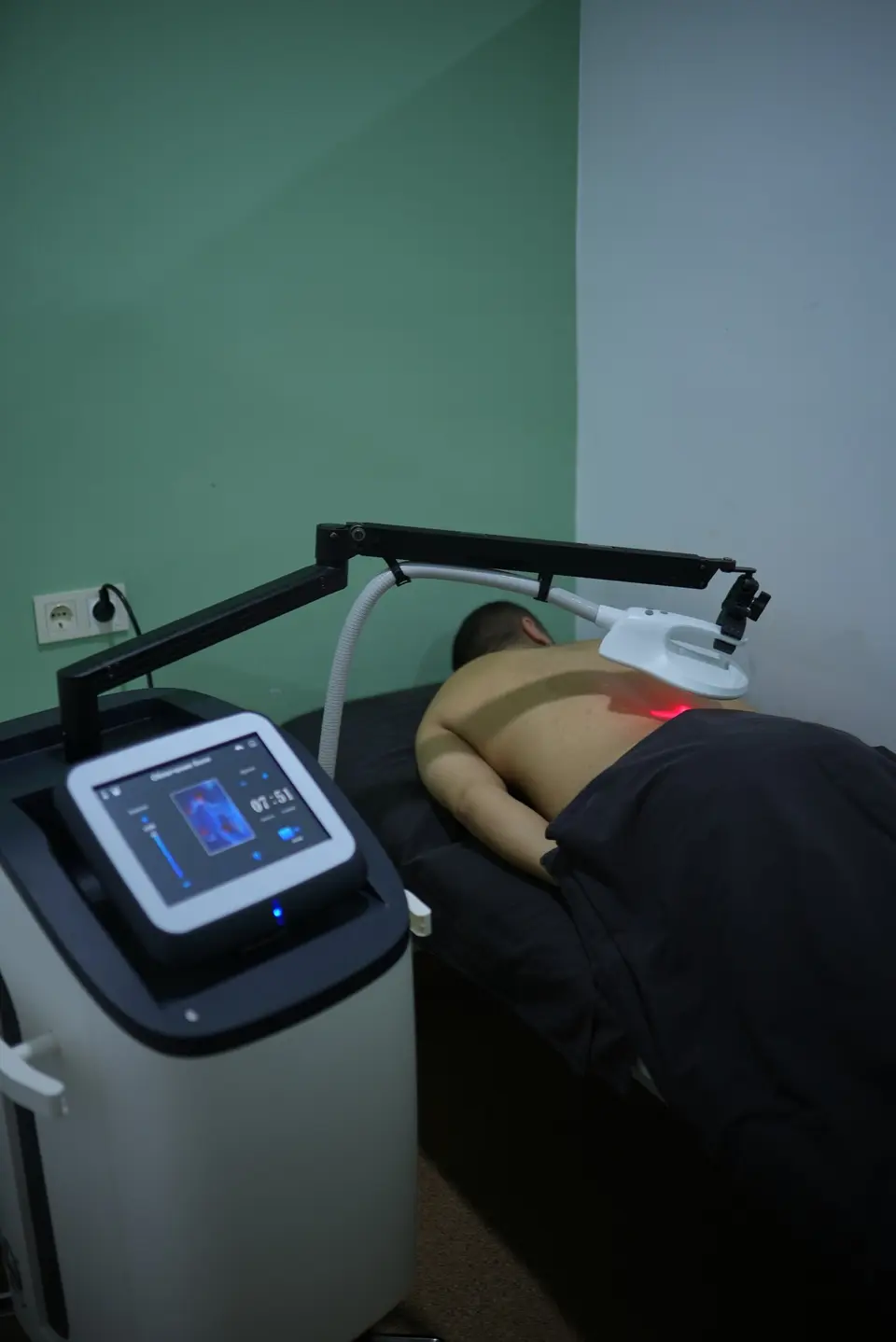
The course centres on the full Naftalan treatment bath. The doctor may add a thermal or Naftalan‑paraffin application on the painful joint, shock wave therapy, magnetotherapy, laser therapy and massage.
For back and neck problems, spinal traction and underwater massage can also be prescribed. Not every sanatorium has every procedure, and below we show where they are available.
How many days do you need for joint treatment?
For joint and back problems, a 10–14 day course is most common. If the condition has lasted many years, the doctor may suggest 21 days.
Pain usually begins to ease in the second week. To maintain the result, it helps to repeat the course once or twice a year.
Which sanatorium should you choose for joint treatment?
If your back or neck is the main issue, choose sanatoriums with spinal traction and shock wave therapy: Gashalti Naftalan, Nafta Sanatorium and Gold Naftalan.
For knees and hips, baths and applications are offered almost everywhere, so choose by budget and facilities. See all options in our comparison table.
Who should not have it?
Naftalan treatment is not prescribed in the acute phase of a condition, or for tumours, blood disorders, active tuberculosis, severe heart failure or during pregnancy.