What is Naftalan oil?
Naftalan oil is a heavy, thick natural crude oil extracted in the town of Naftalan. Most of it is made up of naphthenic hydrocarbons, which is why it is used as a remedy rather than as fuel.
Its colour ranges from dark brown to black, and it is oily and viscous. What sets it apart from ordinary crude is that it contains few of the light fractions needed for fuel, and a lot of the naphthenic compounds linked to its healing effect. This oil is the basis of the Naftalan treatment offered in the sanatoriums.
Naftalan oil benefits: when doctors prescribe it
The benefits most often linked to Naftalan oil are less inflammation and pain, better blood circulation and support for skin repair.
Doctors mainly prescribe Naftalan baths and applications in these cases:
- Joint and back pain: arthritis, arthrosis, osteochondrosis and radiculitis. More: joints and spine.
- Skin conditions: in psoriasis, eczema and dermatitis, itching and inflammation ease. More: psoriasis and skin.
- Nerve pain: neuritis and radicular pain. More: nervous system.
- Women's and men's health: chronic inflammation outside flare-ups. More: gynecology and urology.
The benefits are not the same for everyone: results depend on the condition, its stage and how well the course is planned. That is why treatment is always prescribed by a doctor.
Naftalan oil risks: who should avoid it?
Naftalan oil can do harm mainly when it is used despite contraindications or without a doctor. It is not prescribed for tumours, blood disorders, active tuberculosis, severe heart failure or during pregnancy.
- acute inflammation and the acute phase of infectious diseases
- benign and malignant tumours
- blood disorders and a tendency to bleed
- active tuberculosis
- severe heart failure and some other heart and vascular diseases
- pregnancy
- individual intolerance to Naftalan
Some people get skin irritation, have an individual intolerance or feel slightly weak after the first baths. That is why the doctor increases the number and length of baths gradually. We describe the bath rules in detail on our Naftalan baths page.
What is in Naftalan oil?
Naftalan oil consists mostly of naphthenic hydrocarbons. It also contains aromatic hydrocarbons, resins, naphthenic acids and small amounts of trace elements.
- Naphthenic hydrocarbons: most often linked to the healing effect.
- Aromatic compounds and resins: more abundant in black Naftalan; removed when white Naftalan is made.
- Naphthenic acids: thought to play a role in its effect on the skin.
Because the oil contains few light fractions such as petrol, it has practically no value as fuel. That is why locals call it "the oil that doesn't burn".
Black and white Naftalan: what is the difference?
Black Naftalan is the natural, unprocessed oil and is used in baths. White Naftalan has been refined to remove resins and is used in gentler skin treatments.
| Black Naftalan | White Naftalan | |
|---|---|---|
| What it is | Natural crude oil | Oil refined to remove resins |
| Where it is used | Full and local baths, thermal applications | Skin applications, phototherapy, ointments |
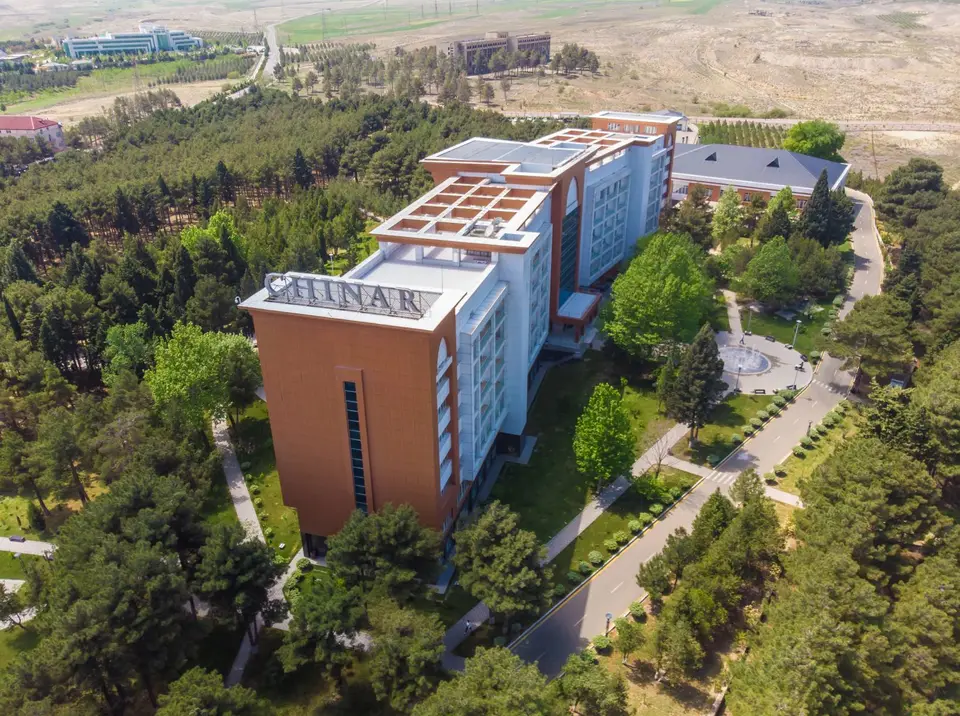
For example, Gashalti Naftalan and Chinar Naftalan offer phototherapy with refined Naftalan, while Gold Naftalan offers both refined and thermal applications.
Naftalan ointment: what is it and how is it used?
Naftalan ointment is a topical product made from refined Naftalan oil and applied locally to the skin or over a joint.
In fact, the first industrial Naftalan product was an ointment. Today pharmacies sell Naftalan-based ointments, creams and shampoos. They can help with mild symptoms at home, but they do not replace a sanatorium course: at a sanatorium the doctor prescribes natural Naftalan baths, applications and physiotherapy together, in the right doses. Naftalan tampons are prescribed only by a doctor.
The history of Naftalan oil
People have known about the healing power of Naftalan oil for a long time. In the late 19th century an ointment was made from it industrially, and in the 20th century a resort grew up around it.
The best-known legend tells of a sick camel left behind by a caravan, which recovered in a pool of oil. In the late 19th century the German engineer E. Jäger started producing the ointment, and the name "Naftalan" became known in Europe. Later the first clinics opened in the town. Read the rest of the story in our guide to the town of Naftalan.
How do sanatoriums use Naftalan oil?
Sanatoriums use Naftalan oil in four ways: the full bath, the local bath, applications and combined procedures with physiotherapy.
- Naftalan bath: 8–10 minutes in oil warmed to 37–38 °C; this is the main procedure of the course.
- Local bath: for example, a four-chamber bath for the hands and feet.
- Application: thermal Naftalan, refined Naftalan or a Naftalan-paraffin mix is applied to the painful area.
- Combined procedures: Naftalan with infrared light, ultrasound or phototherapy.